

How do I work out which hairstyle suits me?
Measure four things on a front-facing photo: the width of your forehead, the width across your cheekbones, the width of your jaw, and the length from hairline to chin. Whichever of the three widths is largest, and how the length compares with the cheekbone width, places you in one of six face shapes: oval, round, square, heart, diamond or oblong. Each shape has cuts that add width where the face is narrow and take it away where the face is wide.
Visio AI is an AI photo editor app for iOS and Android from Vision Labs. It redraws a haircut onto your own photo in about a minute, so once you know the shape you can check the three cuts it suggests on your real hairline instead of on a model. Every new account starts with a free trial.
Last checked September 10, 2026
Measure your face shape in three steps
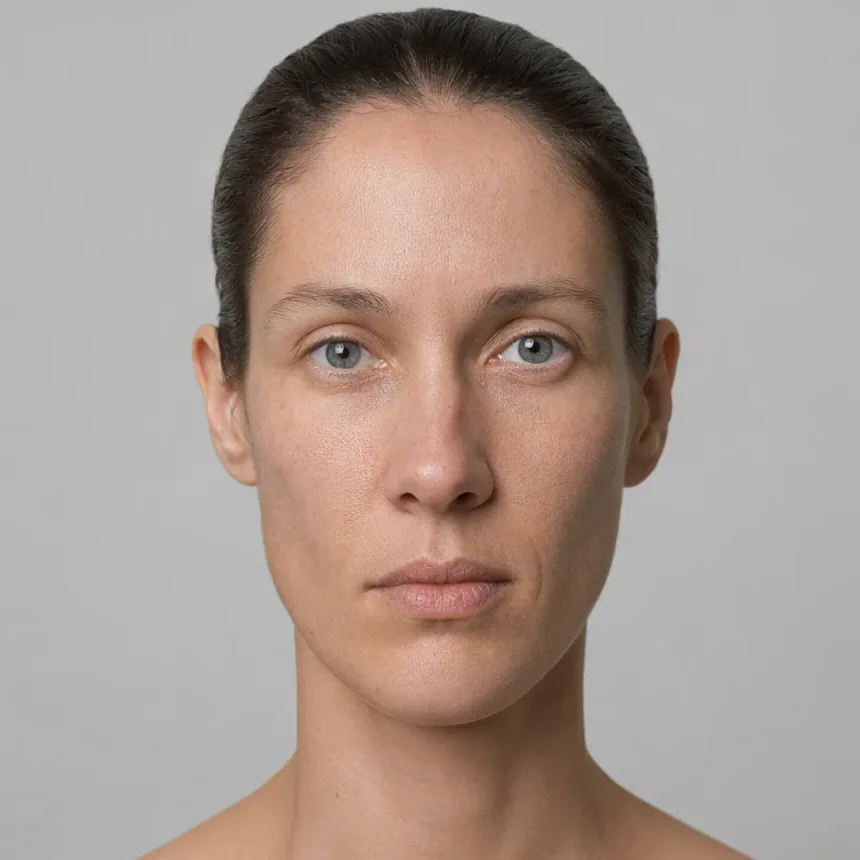
Take one front-facing photo
Hair pulled back off the temples, chin level, even light, camera held at eye height. A photo beats a mirror because you can measure on the screen and keep the result.
Take four measurements
Forehead at its widest point, cheekbones from the outer corner of one eye to the other, jaw from below one ear to the point of the chin and then doubled, and hairline to chin for length. The unit does not matter as long as all four use the same one.
Read the shape, then preview
Find your shape in the table below, take the three cuts it lists, and render them on the same photo to see which one your own hair actually holds.
Six cuts, one photo, six different answers
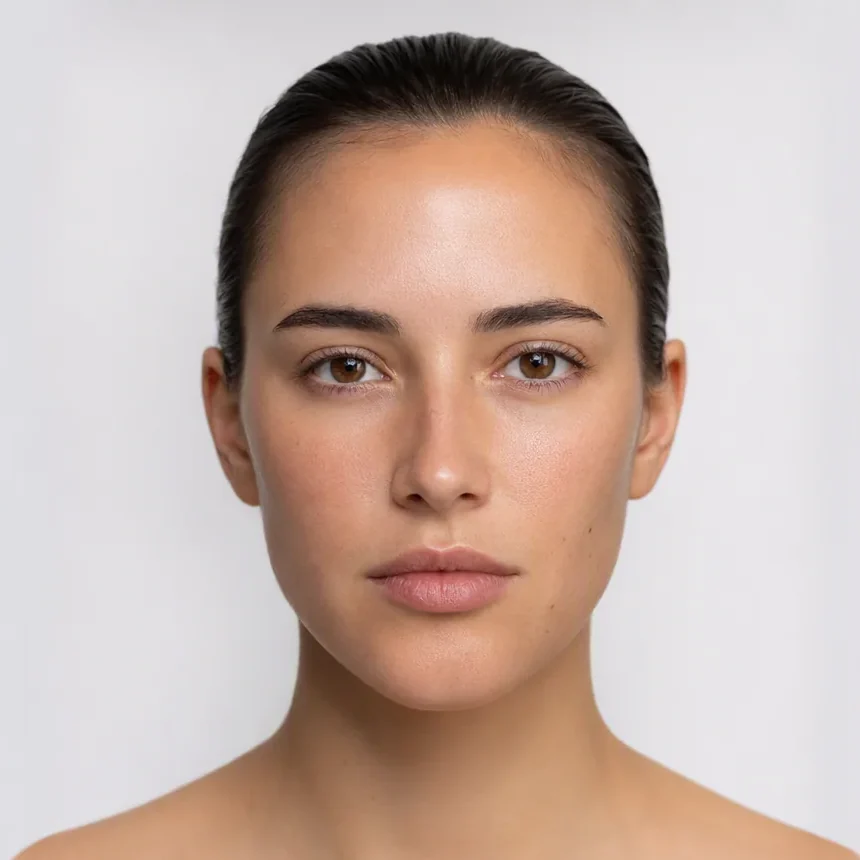
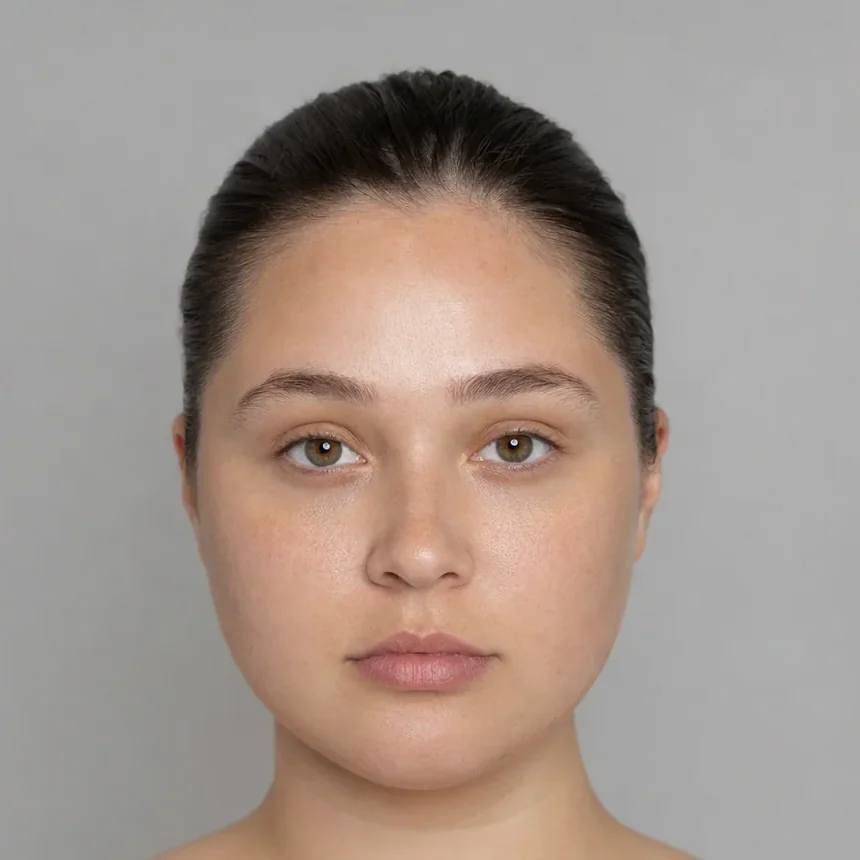
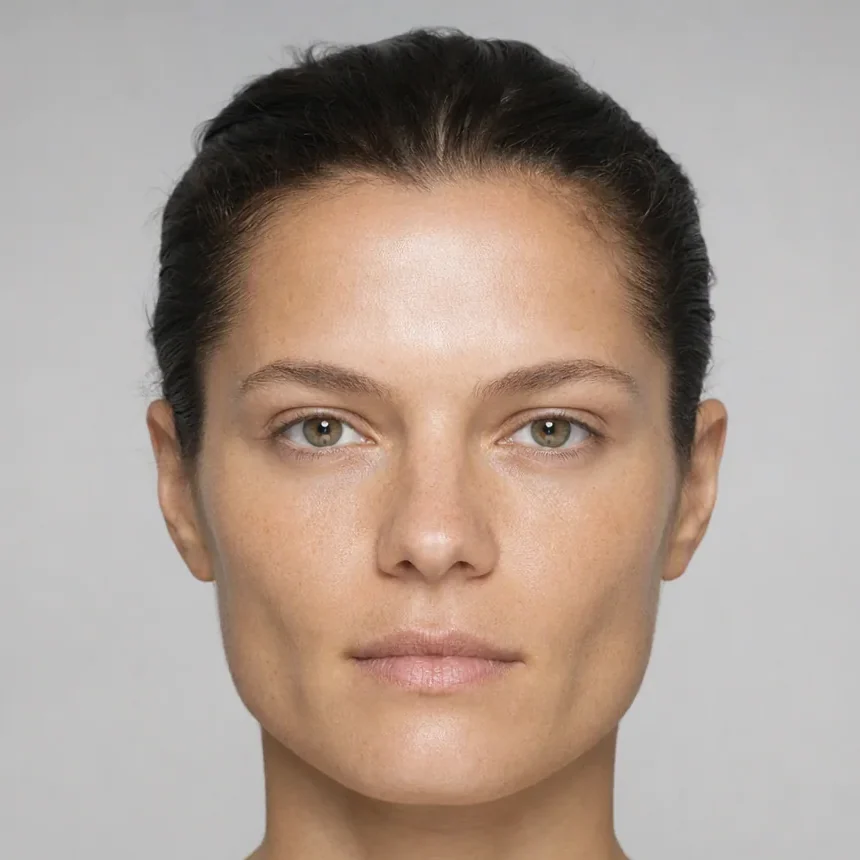
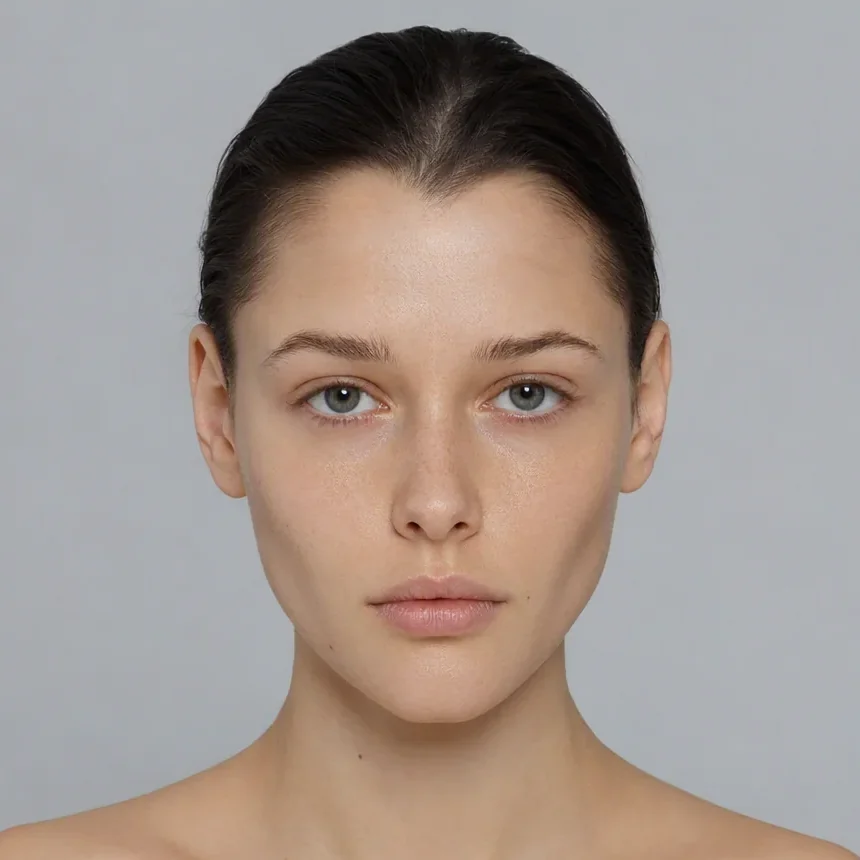
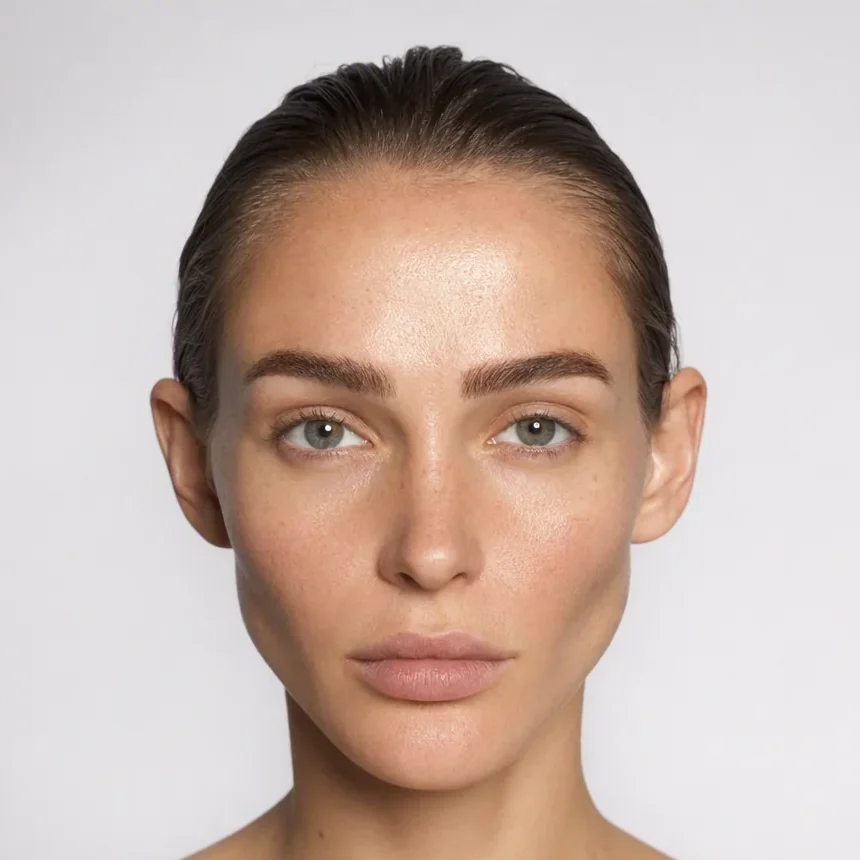
Every result below came from the single photo at the top of this page. Nothing else was edited, so what changes between them is only the cut and where it puts the weight.
Tap or hover any result to see the original photo underneath.
What each face shape suits, and what fights it
Read the table as a shortlist, not a verdict. The left column is how to recognize the shape from your four measurements; the last column is where to start rendering.
If two rows describe you equally well, you are between them, which is the common case. Most faces are a blend of two shapes. Shortlist the cuts from both rows and let the previews settle it.
| Face shape | How to recognize it | Usually suits | Usually fights | Start with |
|---|---|---|---|---|
| Oval | Length about one and a half times the cheekbone width, jaw slightly narrower than the forehead | Almost anything, blunt cuts and center parts included | Very heavy blunt bangs, which hide the balance the shape already has | Lob, curtain bangs |
| Round | Length and cheekbone width close to equal, jawline soft with no visible corner | Length past the chin, long layers, height at the crown, a side part | A chin-length blunt bob, or one-length hair parted down the center | Long layers, butterfly cut |
| Square | Forehead, cheekbones and jaw within about half an inch of each other, jaw clearly angled | Soft layers, a side part, waves, texture through the ends | A blunt bob ending exactly at the jaw, or straight-across bangs | Wolf cut, curtain bangs |
| Heart | Forehead widest, jaw narrowest, chin coming to a point | Chin to collarbone length, volume at the jaw, side-swept or curtain bangs | A very short pixie with crown volume, or hair pulled tight off the forehead | Blunt bob, lob |
| Oblong | Length clearly more than one and a half times the cheekbone width, three widths similar | Horizontal width, bangs, waves, cuts ending between chin and collarbone | Long one-length straight hair with a center part, or a high top knot | Curtain bangs, long layers |
| Diamond | Cheekbones clearly widest, forehead and jaw both narrow, face longer than it is wide | Bangs that give the forehead width back, volume at chin level | Slicked-back styles with nothing at the hairline, or very short crops | Curtain bangs, blunt bob |
Three things that matter more than your face shape
Face shape decides where a cut adds width and where it removes it. It does not decide whether the cut will hold that shape on your head once you leave the salon, and that is the part people find out too late. Three properties of your own hair decide it, and none of them appears on a face shape chart.
This is why two people with the same measurements can get the same bob and walk out with different haircuts. It is also why a preview on your own photo is worth more than a reference picture of somebody else.
- Texture straight, wavy, curly or coily. The same blunt bob hangs flat on straight hair and builds a triangle on wavy hair that has no internal layers.
- Density how many hairs you have, which is not the same as how thick each one is. Fine dense hair and coarse sparse hair behave differently under one cut.
- Growth pattern your hairline, a cowlick at the front and the whorl at the crown. Bangs that have to cross a cowlick will part themselves every morning however they are cut.
How to measure without a tape measure
You do not need a tape measure. Open the photo, draw four straight lines across it with any markup tool and compare their lengths on screen. Classification only needs relative size, so a screenshot and a finger are enough.
Two details change the answer more often than the measuring does. Take the photo at eye height, because a camera held above you narrows the jaw and stretches the face, which is why selfies read as heart-shaped far more often than faces actually are. And pull the hair completely off the temples, since a few strands over the sides hide exactly the width you are trying to measure.
Do the measuring with a neutral expression and a level chin. A smile widens the cheeks by enough to move a borderline face from oval into round, and a chin tipped down shortens the length measurement that half the classification depends on.
Face shape for men, and what glasses and a beard change
The four measurements are identical for men; the cuts that answer them are not. A round face reads longer with height on top and short sides, and a long face reads shorter with bangs or a textured crop rather than a high quiff. Fades, crops, quiffs and buzz cuts are in the same library and follow the same photo rules.
Two things sit on top of the face and change the arithmetic. Glasses add horizontal width at cheekbone level, which can do for a long face what bangs would otherwise have to do. A beard adds length and squares off the jaw, so a face that measured as heart without one often behaves as square with one. If you wear both, measure and preview with both on rather than without them.
From the chart to the chair
A face shape chart narrows thousands of cuts down to three. Only the preview tells you what those three do on your hairline, your parting and your current length, and only a saved image ends the language problem at the appointment. Just the ends means a different amount to every person who says it; a picture of your own face does not.
Hair grows roughly half an inch a month, so a cut you regret stays with you for months, while a color you regret can usually be adjusted in one appointment. That asymmetry is the whole argument for spending the minute before the cut rather than after it.
Take two saved renders to the appointment rather than one, and bring the one you rejected as well. A stylist reads a pair faster than a description, and the rejected cut tells them the direction you do not want.
Try on the full hairstyle library Best hairstyle for your face shape, shape by shape Try hair colors on the same photo
Cost, time and what you need
Every new account starts with a free trial, so the first previews cost nothing. After the trial, Pro unlocks unlimited renders across every feature.
| Item | Detail |
|---|---|
| Time per result | About one minute |
| What you need | One front-facing photo with the hair pulled off the temples |
| Measurements | Forehead, cheekbones, jaw and hairline to chin, all in the same unit |
| Face shapes covered | Oval, round, square, heart, diamond and oblong |
| Devices | iPhone and iPad (iOS 15 or later), Android 9 or later |
| Price | Free trial for every new account, then Pro, monthly or yearly |
| Results | Saved in the app and exportable to your camera roll in full resolution |
What happens to your photo
Your photo is uploaded over an encrypted connection, used to render the result you asked for, and is not used to train models. You can delete any project inside the app and the associated images are removed with it.
Results are AI renderings on your own photo. They show how a look could sit on you, not a guarantee of how a salon, camera or product will reproduce it.
Frequently asked questions
How do I find out my face shape?
Take one front-facing photo with your hair pulled back, then compare four measurements: forehead width, cheekbone width, jaw width, and the length from hairline to chin. The largest of the three widths, together with the ratio of length to cheekbone width, places you in one of six shapes: oval, round, square, heart, diamond or oblong.
Which haircut suits a round face?
Cuts that add length and keep the weight below the chin: long layers, a butterfly cut, a lob at or past the collarbone, a side part and some height at the crown. The one to test carefully is a blunt chin-length bob with a center part, because it repeats the widest line of the face rather than breaking it.
Does face shape really decide which haircut suits me?
It decides where a cut adds or removes width, which is about half the answer. Hair texture, density and growth pattern decide whether the cut holds that shape once you leave the salon, and day to day those three matter more than the outline of your face.
What if my face is between two shapes?
That is the normal case, because most faces are a blend of two. Shortlist the cuts listed for both shapes, render them on the same photo, and choose by what you see rather than by which label you settled on.
Can I try a haircut on my own photo before booking?
Yes. Visio AI is an AI photo editor app for iOS and Android from Vision Labs. Upload one front-facing photo, choose a cut, and the app redraws only the hair while your face, expression and background stay as they were. A result takes about a minute.
Does face shape work the same way for men?
The measurements are identical, the answers differ. Height on top with short sides lengthens a round face, while bangs or a textured crop shorten a long one. A beard squares off the jaw, so measure and preview with the beard you actually wear rather than without it.
Which face shape is hardest to cut for?
None is hard, but oblong and diamond leave the least room for error, because both need width added rather than removed and bangs are usually the answer for both. Bangs are also the change people are most reluctant to commit to without seeing it first, which is what the preview is for.
Is the hairstyle preview free?
Every new account gets a free trial that includes hairstyle previews. After the trial, Pro unlocks unlimited renders across every feature in Visio AI.
How accurate is the preview?
It is drawn on your real photo with your real proportions, so the shape, the length and where the weight sits are reliable. The exact finish depends on your hair density and on your stylist, so treat it as a strong preview rather than a promise.